
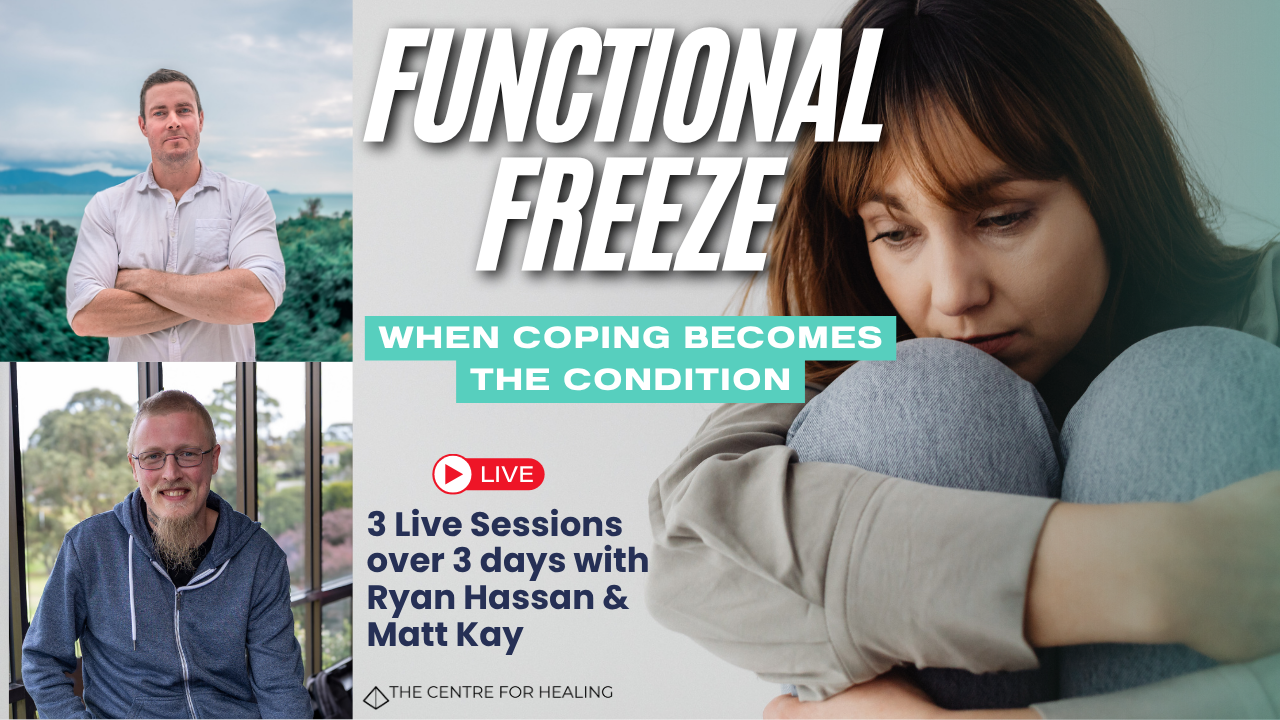
Functional Freeze:
When coping becomes the condition.
3 Day Live Event
This has become one of the most common questions our practitioners ask us.
And almost everyone who asks it has been living in it for years.
It usually arrives sideways.
Someone will be asking about a client who keeps shutting down, and then, almost as an afterthought:
is it normal to feel nothing? I'm functioning, everything's getting done, I just… I don't know.
So we name it. Functional freeze - the state where you keep functioning while something underneath has quietly stopped.
And there's a pause. Then some version of the same sentence, nearly every time:
I think I've been in this for years.
That is why we're running this workshop.
See if any of this is familiar;
- You're functioning, and underneath it there's a flatness you can't argue your way out of
- You rest, take the holiday, clear the weekend, and come back exactly the same
- You can describe precisely how you feel and not actually feel any of it
- You're busy all day and couldn't say what you actually accomplished
- You know what state everyone around you is in and have no idea what yours is
- Small decisions take longer than big ones
- Everyone keeps telling you how well you're coping
And maybe your clients;
- Go quiet, agreeable and far away in the middle of a session
- Do every practice you give them perfectly and never shift
- Tell you they feel nothing, or numb, or fine
- Carry shame about not having fought back
- Look like they're coping, and keep getting worse
- Shut down the moment you get near something that matters
If you recognise yourself or your clients in that, you're looking at a nervous system state — not a personality, and not a discipline problem.
Functional freeze is the brake held on permanently. The charge keeps running underneath, you just stop feeling it. From the outside it reads as coping, competent, busy, on top of things.....which is exactly why it goes unnamed for years, often by the very people trained to spot it in everyone else.
It's also why rest doesn't touch it. Rest is stillness without fear. Freeze is stillness with fear underneath. Identical from the outside, opposite states inside. That's why you can take two weeks off and feel the same again by Wednesday.
It is the most common state in this profession, and almost nobody teaches it.
Over three live sessions
Session 1 — 4 kinds of 'stuck' and which one is yours
Tuesday 22 September · Recognising the 4 freeze states, and why rest doesn't shift them
Session 2 — Taking the brake off & moving through your freeze
Wednesday 23 September · Practices to move a frozen system
Session 3 — Holding someone else who's shut down
Thursday 24 September · Tools & techniques for working with freeze in your clients
Sessions one and two are yours. Session three is where we turn it around and it's the approach we teach in our practitioner certification, not an overview of it.
Delivered over 3 live sessions — Tuesday 22, Wednesday 23 and Thursday 24 September, 10am AEST.
Replays and lifetime access included, plus a workbook written for these sessions.
8:00am Perth · 12:00pm New Zealand · 1:00am London · 8:00pm New York and 5:00pm Los Angeles the evening before. Replays go up within a few hours, so the live time isn't a problem if it doesn't suit you.
Total Investment: AUD $167
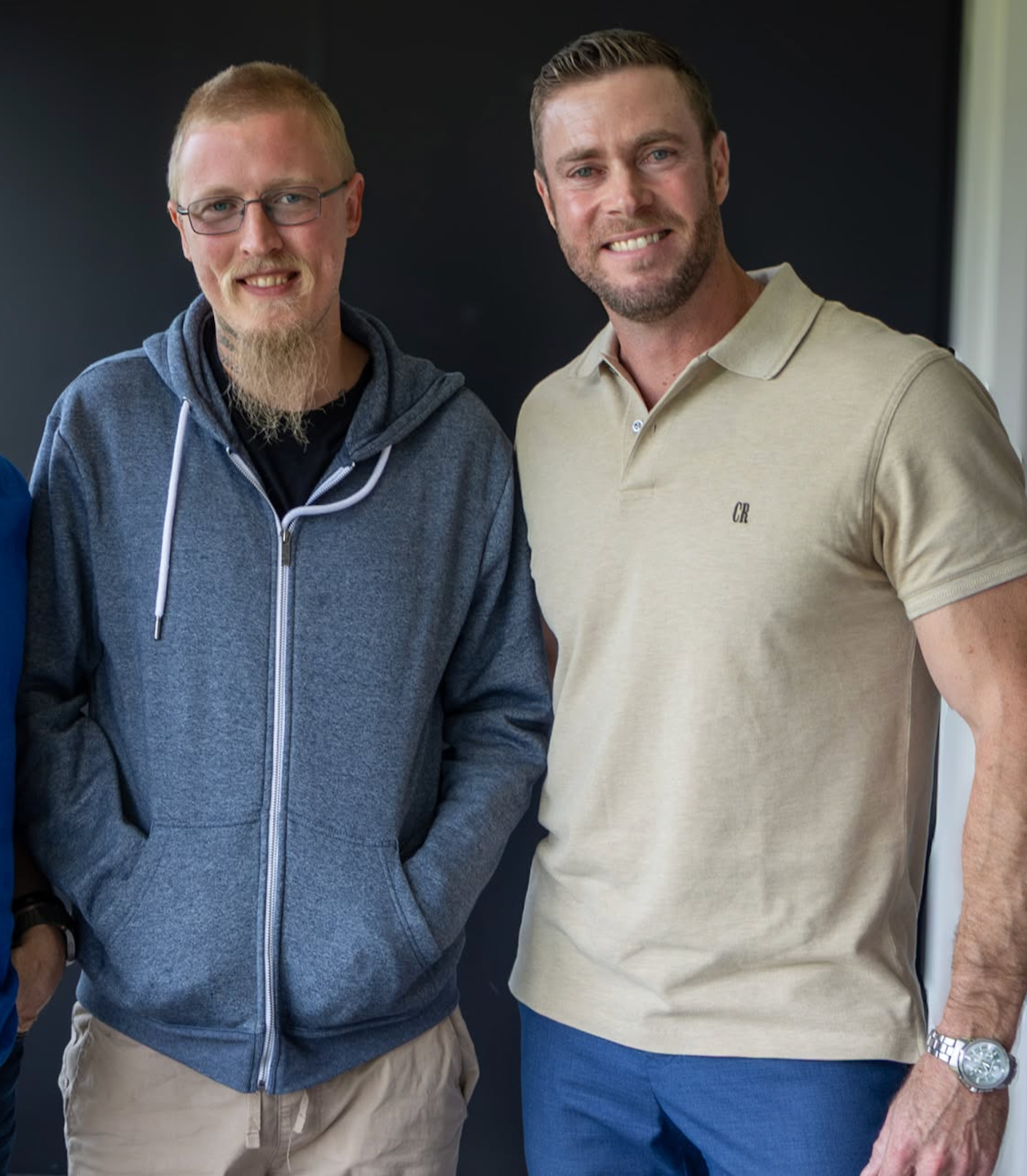
The Trainers
Matt Kay and Ryan Hassan have been teaching this material together for years.
Matt is a somatic psychotherapist and co-creator of Embodied Processing. Eight years in private practice, plus years working in drug and alcohol rehabs supporting people through recovery, and certified as a holistic counsellor, addiction specialist, AOD worker and hypnotherapist. He brings lived experience to the work on trauma and developmental trauma as much as he brings training.
Ryan co-founded The Centre for Healing over a decade ago, training thousands of practitioners around the world in trauma-informed work. Embodied Processing, Root-Cause Therapy, breathwork, meditation and somatic tapping.
He has also been a somatic practitioner for 10 years.
What they bring to this one is two things that don't usually share a room: what the older contemplative traditions understood about consciousness, and what modern neuroscience knows about trauma and the nervous system. They teach the way they talk, open-ended and exploratory, pointing you toward your own wisdom rather than handing you theirs.