The Modality
Embodied Processing
A bottom-up approach to healing trauma and nervous system dysregulation.
A somatic, trauma-informed modality grounded in modern neuroscience and ancient wisdom. It helps people meet what lives beneath the surface — and move through it.
Embodied Processing, briefly
Embodied Processing (EP) works with the roots of trauma, anxiety, depression, addiction, and chronic stress through the nervous system — not just the thinking mind.
It draws on the body’s innate intelligence to discharge stored stress, restore regulation, and return us to a felt sense of wholeness.
EP is evidence-informed, integrative, and holistic. It combines the latest in trauma neuroscience with insights from somatic, psychotherapeutic, and ancient healing traditions.
Talking about a broken leg doesn’t help it heal. Emotional wounding works the same way.
An introduction to Embodied Processing
A short overview of the modality — what it is, where it comes from, and what it works with.
Why the body?
Trauma, stress, and unprocessed emotion don’t only live in the mind. They live in the body — held as contracted stress in the nervous system.
Reframing and analysing have their place, but on their own they rarely create lasting change in the parts of us that were never about words to begin with.
EP meets stored stress where it actually lives. From the bottom up.
What an EP session looks like
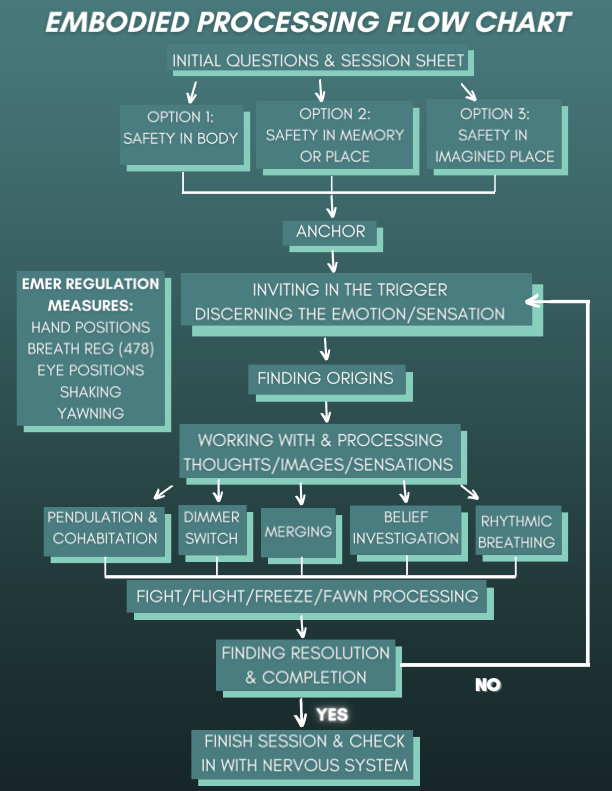
Every EP session follows a deliberate, paced structure designed to keep clients safe and resourced throughout:
- Build a foundation of safety — in the body, a memory, or an imagined place
- Anchor into that resource
- Invite the trigger or theme to be explored
- Discern the emotion or sensation that arises
- Find its origins
- Process what comes up using one of several techniques (pendulation, dimmer switch, merging, belief investigation, rhythmic breathing)
- Work with fight, flight, freeze, or fawn responses as they emerge
- Find resolution and completion
- Check in with the nervous system before closing
The work stays within the client’s window of tolerance. Practitioners are trained to recognise overwhelm and de-escalate before it takes hold.
What EP can support
- Developmental, acute, intergenerational, & complex trauma responses
- Feelings of anxiety, depression, and chronic overwhelm
- Addictive tendencies, both substance and behavioural
- Low self-esteem and self-sabotage
- Difficult relationship patterns
- Nervous system dysregulation and chronic stress
- Unresolved grief
EP is not a replacement for medical or psychiatric care. Certified practitioners work within a defined scope and refer to other professionals when appropriate.
The science and lineage behind EP
EP integrates the work of leading trauma researchers and somatic pioneers:
It also draws on NeuroAffective Touch, the Diamond Approach (open-ended inquiry), Compassionate Inquiry, and Ancient Healing Traditions.
The result is one coherent framework, refined through thousands of client sessions.
What an EP Practitioner has actually done
A certified EP Practitioner has not done a weekend course.
- 55 hours of structured theory across 9 modules
- 15 sessions given to practising students
- 15 sessions received from practising students
- 1–5 paid sessions with a senior practitioner or trainer
- 5 live group sessions on Zoom (minimum)
- 1 recorded assessment session reviewed and signed off by an EP Trainer
- Ongoing peer support and community supervision throughout
Average time to certify: 6 months.
The curriculum covers trauma theory, the polyvagal nervous system, emotional development, the unconscious mind, addiction, spirituality, and the EP process itself in depth — the kind of breadth required to hold sessions safely.
Accreditation and professional recognition
International Institute for Complementary Therapists (IICT)
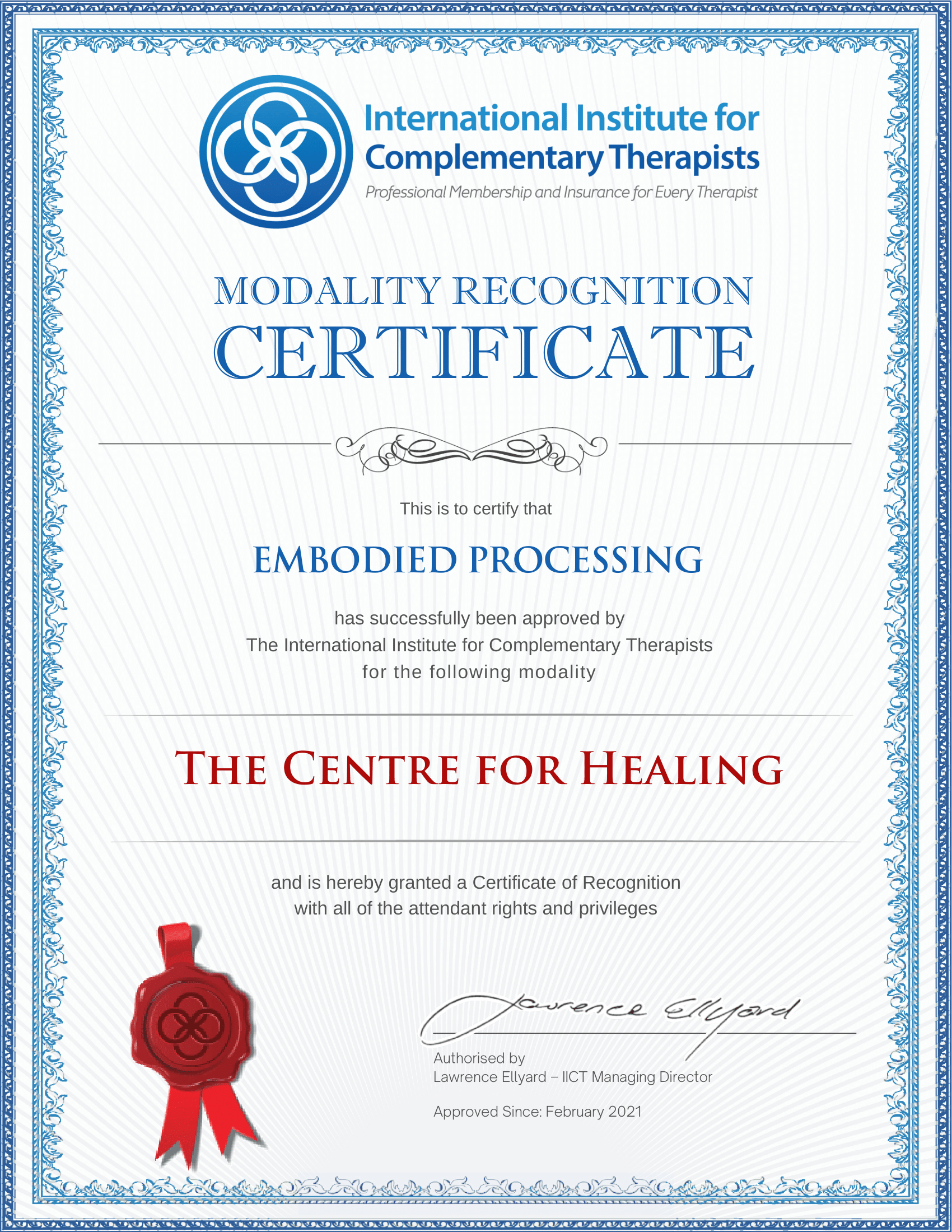
Embodied Processing is a fully recognised modality with the IICT — a global professional body accrediting therapists across more than 1,000 modalities.
The CPD Register
EP is listed on the CPD Register and accredited for 80 CPD hours/points — recognised as continuing professional development for allied health and complementary practitioners.
Professional indemnity insurance
EP Practitioners with a relevant prior tertiary qualification are eligible for professional indemnity insurance through IICT.
Code of ethics and scope of practice
Every certified EP Practitioner is bound by a written Code of Ethics that requires:
- Non-judgmental, professional service free from discrimination
- Confidentiality and informed consent
- Ongoing supervision and continued professional development
- Referral when a presenting concern falls outside their scope
- A two-year professional boundary on personal relationships with clients
- A strict prohibition on financial, emotional, sexual, or any other exploitation of clients
Practitioners also work within a defined scope of practice and refer to medical, psychiatric, or specialist services where appropriate.
Meet the creators
Ryan Hassan
Trauma Therapist, Root Cause Therapist, Conversational Hypnotist. Nearly a decade of one-on-one client work and the founder of an outpatient clinic delivering hundreds of holistic recovery programs. The Centre for Healing now serves over 120,000 students worldwide.
Matt Kay
Holistic Counsellor, addiction specialist, certified AOD (alcohol and other drug) worker, Hypnotherapist. Eight years in private practice and extensive work in addiction recovery settings.
Noel Haarburger
Psychologist (MAPS, ClinGANZ), Adv Dip Gestalt Therapy, Somatic Experiencing Practitioner (SEP). Faculty member at Gestalt Therapy Australia since 2001. Over 20 years in private practice.
What practitioners are saying
I have been a talk therapist for almost 20 years and did not know how much I was missing until I found EP. It has truly transformed me both personally and professionally in ways I never expected.
Randi GarfinkelAs someone with a psychology honours degree and a master’s in counselling and psychotherapy, I have engaged in various training programs, but none have left such a profound impact as this one… What sets it apart is the seamless integration of neuroscience and ancient healing traditions.
Sharon NicoleThe information and techniques are cutting edge and based on all the latest research which is quoted and referred to regularly throughout the course.
Sonia WalkerFind or verify a certified EP Practitioner
If you’re looking for a practitioner trained in this work — or you want to verify someone you’re already working with — our directory lists every certified EP Practitioner currently in practice.
Frequently asked questions
Is Embodied Processing a recognised therapy?
Yes. EP is internationally accredited by the IICT and listed on the CPD Register for 80 CPD hours. Practitioners with a relevant tertiary qualification are eligible for professional indemnity insurance.
Do I need to talk about my trauma in detail?
No. EP works through the body, not through continuous retelling. You don’t need to relive a story over and over again for the work to be effective.
How is EP different from talk therapy?
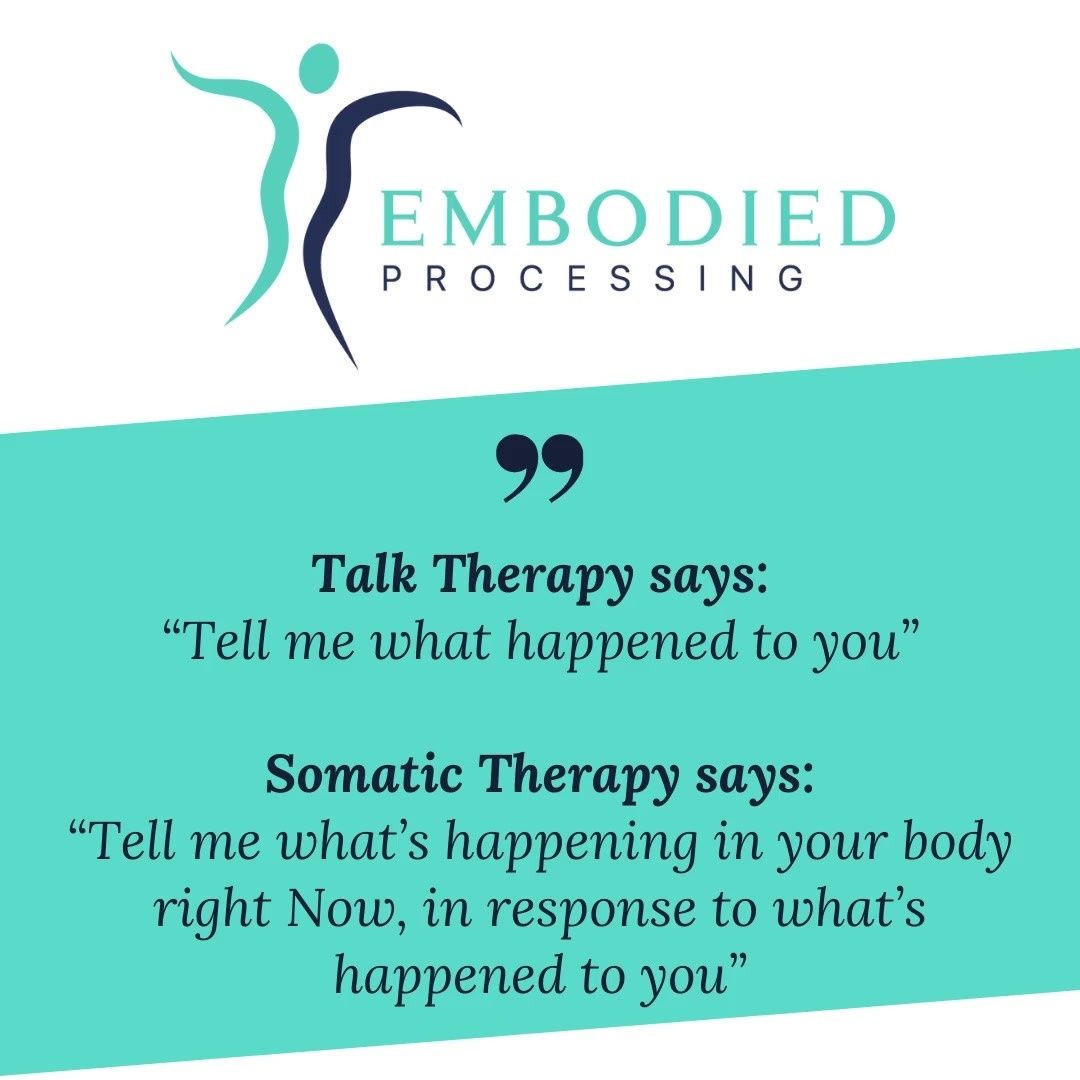
Talk therapy works top-down — through thinking, language, and meaning-making. EP works bottom-up — through the body and the nervous system. Both have their place; EP reaches what talking alone often can’t.
How long does it take to feel a difference?
This varies. Some clients notice a shift after a single session; for others, deeper change unfolds over a series of sessions. Your practitioner will discuss what’s realistic for what you’re working on.
Is EP safe?
EP is designed to keep clients within their window of tolerance throughout. Practitioners are trained to track nervous system states and de-escalate when needed. EP is not appropriate for active psychiatric crisis or as a substitute for medical care — practitioners refer where appropriate.
Who can practise EP?
Only practitioners who have completed the full 130-hour certification through The Centre for Healing and been signed off by an EP Trainer. You can verify any practitioner via the Practitioner Directory.
Curious about training in Embodied Processing?
Therapists, counsellors, coaches, and people drawn to this work from lived experience all find their way here.
Learn more about the training