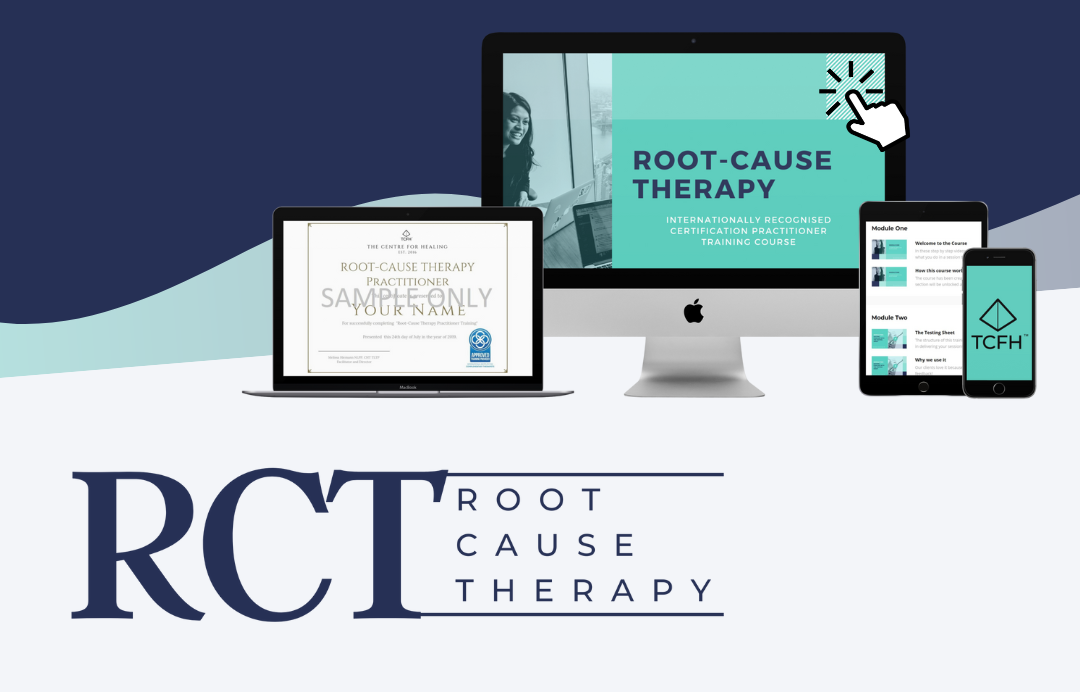
Root-Cause Therapy in the Treatment of Addictions
Sep 29, 2025
Root-Cause Therapy (RCT) is a trauma-informed healing modality designed to help people uncover and resolve the emotional and subconscious roots behind behaviours that no longer serve them — including addiction.
Instead of focusing on abstinence alone, RCT works to heal what the addiction is trying to cope with. In doing so, the drive to return to the behaviour often fades naturally. This proposal shares how RCT could complement your current addiction recovery programs, offering clients deeper healing opportunities.
Rethinking Addiction
Addiction is rarely just about the substance or the behaviour. In fact, we believe addiction is often a person's best attempt at feeling better — when they haven't been taught how to process deep emotional pain, trauma, or chronic dysregulation in the nervous system.
As Dr. Gabor Maté famously says:
“The question is never 'Why the addiction?' but 'Why the pain?'”
People use addiction to manage stress, suppress memories, recreate familiar dynamics, or to feel some sense of control. It's often not conscious, and it's almost always adaptive.
The good news? When we support people to safely process what their body has been holding onto — pain, shame, trauma — the addiction no longer serves the same purpose. That’s where RCT comes in.
How RCT Works
RCT helps people connect the dots between their emotional pain and their behaviour. Using tools like muscle testing, subconscious dialogue, and guided emotional release, we help clients:
-
Discover the emotional root causes of their addictive patterns
-
Process and clear painful memories that their body may still be holding
-
Rewire limiting beliefs such as "I'm a bad person," "I can’t cope without it," or "I always mess things up"
-
Release shame, guilt, and grief that may be keeping the pattern in place
-
Anchor into a new identity and purpose using Future Self integration
Sessions are client-led, deeply respectful, and structured in a way that feels both safe and transformational.
Where It All Began: The Centre for Healing
Root-Cause Therapy was developed by The Centre for Healing, which began as The Melbourne Centre of Healing — a trauma and addiction recovery clinic founded in 2016 by Melissa Hiemann and Ryan Hassan.
Melissa and Ryan both have lived experience with addiction and mental health struggles. They founded the clinic to offer a more human, compassionate, and trauma-informed approach to healing — especially for those who hadn’t found success in traditional models.
Very quickly, the demand for their work grew. They expanded into online practitioner training to make RCT available globally. Today, their programs are accredited by IICT and IAOTH and supported by hundreds of certified practitioners worldwide.
Meet the Founders
Ryan Hassan overcame severe addiction and anxiety himself, which deeply informs the work he does now. He’s passionate about helping others break free without shame.
Melissa Hiemann brings both personal and professional expertise to the modality. She’s certified in NLP, hypnotherapy, Time Line Therapy, and more. She’s also the author of The Natural High: Secrets to Overcoming Instant Gratification and Finding Inner Peace — a book that explores the psychology of compulsions and how to truly feel fulfilled.
Together, they’ve created a healing framework that is practical, powerful, and most importantly, real.
Individual vs. Group Work
While the core emotional release work in RCT is done 1:1, there are many aspects that work well in group settings too. These include:
-
Psychoeducation about the nervous system and emotional cycles
-
Limiting belief awareness and journaling
-
Future Self visualisation
-
Emotional resourcing practices
We even offer group training inside our Practitioner Certification program, so therapists and coaches can learn the method while experiencing it firsthand.
Bringing RCT Into Your Program
Here are a few ways we could integrate:
-
Offer RCT as a 1:1 support stream alongside counselling or group work
-
Run educational workshops or group integration sessions based on RCT tools
-
Invite one of our trained practitioners to facilitate trauma healing sessions weekly
-
Share The Natural High with clients as a grounding self-reflection tool
-
Train your staff in our 12-week RCT Practitioner Certification program
We’re flexible and happy to co-create something that works with your existing model.
Final Thoughts
We know healing is not one-size-fits-all. But what we’ve seen over and over again is this:
When people feel safe enough to feel their pain — without judgment or pressure — they start to heal. And when they heal, the addiction loses its grip.
A critical piece when introducing Root‑Cause Therapy (RCT) inside an addiction‑recovery setting is establishing that it is not an ad hoc or fringe method, but one rooted in a mature organisation with a track record, governance, accreditation, and evolved methodology. Below is a version you could include in your proposal or narrative.
Origins & Evolution
The Centre for Healing (originally launched as the Melbourne Centre of Healing) was co-founded in 2016 by Ryan Hassan and Melissa Hiemann. thecentreforhealing.com Their vision was to create an outpatient clinic in Melbourne with a strong focus on addiction recovery and mental health — not relying solely on mainstream models but integrating alternative and trauma-informed approaches. thecentreforhealing.com+1
Within a short period, the demand for their services outpaced their physical capacity. The founders and team pivoted toward delivering online trainings and certifications, allowing their work to scale beyond Melbourne and become globally accessible. thecentreforhealing.com+1 Over time, their practitioner base has expanded internationally, and the organisation now supports a global network of students, practitioners, and clinical partners. thecentreforhealing.com+1
Founders & Leadership
Ryan Hassan (Co‑Founder / CEO)
Ryan’s own life journey includes overcoming severe struggles with addiction and anxiety. thecentreforhealing.com+1 He cites that his lived experience was instrumental in shaping his commitment to deeper trauma work: after managing to exit addictive cycles himself, he resolved to bring methods of root healing (rather than symptom suppression) to others. thecentreforhealing.com+1 Over time, he has trained in multiple trauma/alternative healing modalities and contributed significantly to the design and refinement of RCT protocols.
Melissa K. Hiemann (Co-Founder / Director / Lead Trainer)
Melissa’s professional and personal journey has informed many of the core tenets of RCT. thecentreforhealing.com+2thecentreforhealing.com+2 She works as a therapist, coach, and trainer; prior to co‑founding the centre, she herself navigated anxiety, addiction, and emotional wounds. thecentreforhealing.com+1 Melissa holds credentialing in NLP, time‑line techniques, hypnotherapy, and other modalities, and serves as the IICT‑accredited Head Trainer of the Root‑Cause Therapy practitioner training. thecentreforhealing.com+1 Her authorship of the book The Natural High: Secrets to Overcoming Instant Gratification and Finding Inner Peace further extends her influence in the field. thecentreforhealing.com+1
Together, Melissa and Ryan form not just a leadership team, but a co‑creative partnership in designing, testing, and evolving RCT practices and trainings.
Scope, Accreditation & Reach
-
The Centre for Healing is internationally accredited through organisations such as IICT (International Institute of Complementary Therapists) and IAOTH (International Association of Therapists). thecentreforhealing.com+2Trustpilot+2
-
Their course reviews (e.g. via Trustpilot) indicate a high level of satisfaction from students across multiple countries, consistently praising the depth, support, and transformational impact of the training. Trustpilot
-
The organisation has shifted from being a local clinic to a digital training institution, which supports scalability, consistency of methodology, and wider community building. thecentreforhealing.com+1
-
Their method (RCT) is referenced by practitioners and allied healing organizations in Australasia and beyond, and is described publicly as a therapy integrating multiple disciplines (e.g. NLP, regression, somatic therapy) toward resolving deep emotional and behavioral patterns. ericaenergyweaver.co.nz+2futurefootstepscounselling.com.au+2
Integration with RCT & Group vs. Individual Work
While the majority of deep RCT work (especially trauma release, emotionally charged regression, belief updating) is best conducted one‑on‑one, The Centre for Healing does offer group training and group modules as part of its practitioner certification track. thecentreforhealing.com+1 These group components are structured intentionally — for teaching fundamentals, providing shared experiential learning, peer coaching, supervision, and integration practices — rather than replacing individual therapy work. You can safely represent that some parts of the RCT framework can be delivered in group settings (especially educational, community, or complementary modules), but the core therapeutic work is individual and deep.
The Natural High — A Signature Text
Melissa’s book, The Natural High: Secrets to Overcoming Instant Gratification and Finding Inner Peace, is more than a personal memoir — it is a foundational companion to RCT’s philosophy and application. thecentreforhealing.com+1
-
The book addresses the psychology of compulsions and instant gratification, which are often closely tied to addictive behavior. thecentreforhealing.com
-
It offers conceptual frameworks, case reflections, and tools that mirror the techniques used in RCT sessions — making it a useful resource for clients, prospective referrals, and allied clinicians who wish to understand the underlying logic before (or during) engaging in deeper therapeutic work. thecentreforhealing.com+1
-
Because the book is already published, it provides visible proof of thought leadership, conceptual maturity, and public-facing commitment to the field. You can mention it in your proposal or pitch as evidence that the founders’ approach is not only lived and practiced, but intellectually articulated and disseminated.
“Root‑Cause Therapy is delivered under the auspices of The Centre for Healing (formerly Melbourne Centre of Healing), founded in 2016 by Ryan Hassan and Melissa Hiemann. Their lived experience, rigorous training, and accreditation (IICT, IAOTH) have allowed the method to scale from a Melbourne outpatient clinic to a globally recognized training institute.
Melissa’s book The Natural High further anchors the model in public thought leadership. While RCT’s deepest work remains one‑on‑one, The Centre also offers group modules, supervision cohorts, and embedded peer support — making it well suited to integration into broader rehabilitation programs.”