
Why Practitioners Are Rethinking Meditation — And What Makes It Truly Trauma-Informed
Jul 23, 2025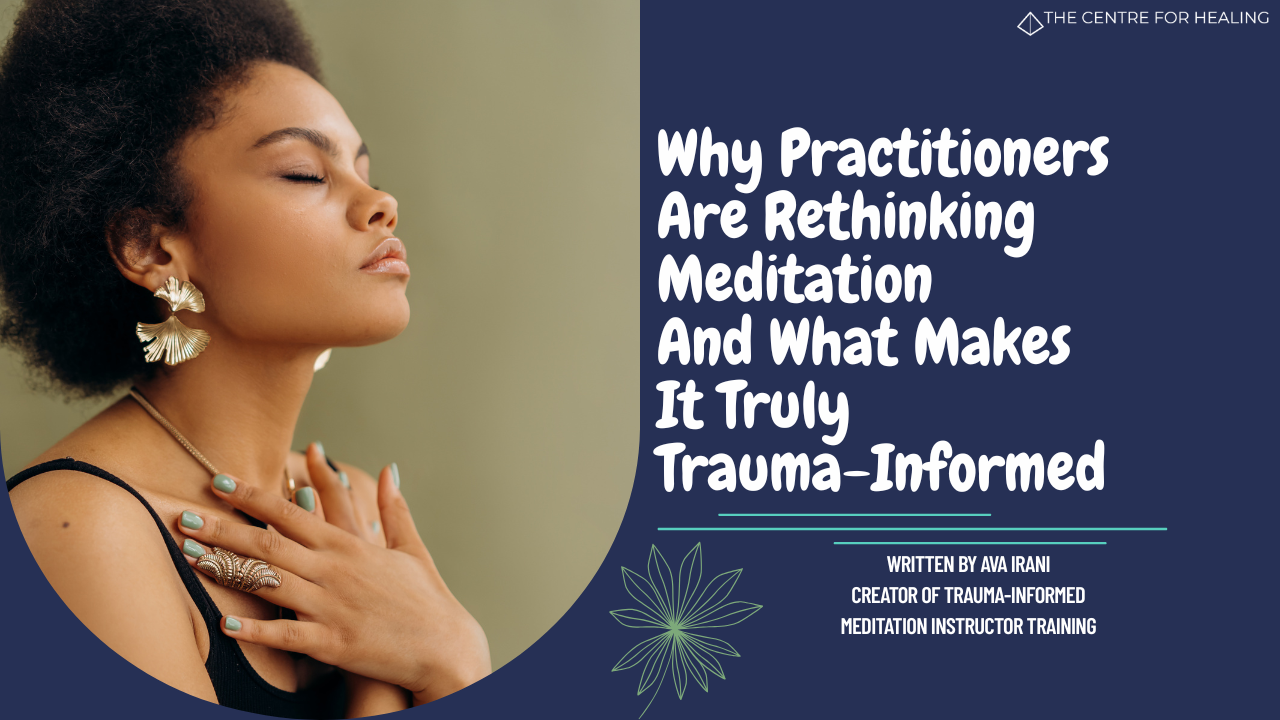
When I first began teaching meditation, I was fully immersed in the world of yoga, ashrams, spiritual community, and disciplined practice. I lived and breathed it. I taught, I led retreats, I built a center. And I truly believed I was doing everything “right.”
But after nearly 10 years of dedicated practice, I hit a wall.
Burnout crept in so quietly that I didn’t realise what was happening, until my nervous system collapsed. It took me by surprise. I had followed every instruction I was given from my spiritual lineage. I was meditating daily, living in devotion, practicing religiously. And yet, I found myself in a full-blown mental health crisis.
That moment changed everything. It was the beginning of a deeper inquiry into what meditation actually does to the body — and what happens when the spiritual practices we rely on to heal, actually bypass the trauma we carry.
I spent 3 years diving into complex trauma, neuroscience and psychoeducation, while at the same time witnessing one of my spiritual communities (with thousands of members) collapse due to the dysfunctional approach at its core.
I rebuilt myself to experience joy, flow, health and connection in a way I never thought possible.
This is where the Trauma-Informed Meditation Instructor Training was born. From lived experience. From a spiritual journey that took me away from healing and into transcendance. From the desire to teach meditation in a way that doesn't push people further away from their bodies, but gently brings them back home.
Why Traditional Meditation Isn’t Always Safe
If you’ve been in the healing or spiritual space long enough, you’ve probably heard things like:
“Just let go of your thoughts.”
“Detach from whatever is making you uncomfortable.”
“Sit in stillness. Watch it all pass by.”
These instructions aren’t wrong — but they’re incomplete. And for many of our clients (and ourselves), they can be actively harmful.
Stillness is not inherently safe.
For people carrying unresolved trauma — which, let’s be honest, is most of us — silence can feel threatening. Closing your eyes might bring up flashbacks. Slowing down may awaken grief or rage. The same practice that promises peace can actually trigger a protective freeze response. And most traditional teachings don’t prepare you for that.
There’s a word for this: spiritual bypassing. It happens when we use meditation to float above the pain, rather than meet it. And in doing so, we unknowingly train ourselves to disconnect — again and again — from the very places that need our attention the most.
HAVE YOU GOT THE ULTIMATE TRAUMA THERAPY CHECKLIST YET??--
What Makes Meditation Trauma-Informed?
Trauma-informed meditation doesn’t ask people to silence their minds or bypass their emotions. Instead, it invites them into relationship with their inner world — at a pace and depth their nervous system can actually handle.
This approach is:
- Grounded in nervous system understanding
- Sensitive to activation, dissociation, and overwhelm
- Built around choice, safety, and pacing
- Focused on meeting, not fixing
- Rooted in integration, not perfection
In the training, we explore the difference between transcendent and healing-based meditation — not to villainize one or the other, but to understand when and how to use them responsibly.
Transcendence has value. It’s a beautiful resource. But it is not a substitute for healing. Real healing requires us to be present with our emotional material — our grief, anger, confusion, and joy — and to meet it with attunement, breath, and space.
Why Practitioners Are Joining This Training
This training isn’t just for meditation teachers. It’s for coaches, therapists, bodyworkers, space-holders — anyone who guides people into inner work and wants to do so with integrity.
Many of the practitioners who take this course tell me:
“I’ve been trying to meditate for years, but now I haven’t dealt with my suffering.”
“I’ve been afraid to guide clients inward because I didn’t feel confident in how to hold what might come up.”
“I want to use meditation not just for relaxation, but as a tool for healing, regulation, and transformation.”
This training gives you that framework. You’ll walk away with practical tools and a deep understanding of how to:
- Create safe drop-ins for sessions, groups or retreats
- Structure and lead healing-focused meditation practices
- Recognise the difference between dissociation and presence
- Support your clients to build nervous system capacity
- Integrate meditation into your existing modality with confidence
It’s also a personal journey. Every practitioner who goes through this training experiences a shift in their own inner life — not because they’re trying to “meditate better,” but because they’re finally learning how to meet themselves, gently and completely.
Be a Part of the New Paradigm of Meditation
Meditation isn’t about mastering silence. It’s about becoming the safest place to meet what’s inside.
We don’t need more rigid practices. We need nuance. We need attunement. We need to stop asking our clients to conform to outdated techniques that were never designed for modern nervous systems.
I’m not here to tell you to stop meditating. I’m here to invite you into a deeper, more embodied way to practice — one that includes your body, your emotions, your past, your healing.
We start with five minutes a day. We begin with a drop-in. We teach others to anchor — not escape.
And from that place, we build something truly life-giving. A meditation practice that heals. A method that empowers. A space that feels like home.
Written by Ava Irani, Creator of Trauma-Informed Meditation Instructor Training
Ready to offer meditation in a way that truly meets your clients?
Join the TI Meditation Instructor Training Webinar Here
Join the TI Meditation Instructor Course Here
Explore our courses and trainings at The Centre for Healing HERE